The original title of this post was "The Proclaimers: Britain's most underrated band?"
After spending a bit of time "researching" on YouTube I realise I sell them hilariously short. They are obviously Britain's most underrated band. And they will continue to be so until British popular opinion catches up with the obvious: they are the only British band to give the Fall any competition as the greatest ever.
Allow me to make my case…
Showing posts with label culture. Show all posts
Showing posts with label culture. Show all posts
Wednesday, 25 June 2014

Tuesday, 3 June 2014
Allsop, women, university and missing the point
So everyone's losing their shit about Kirsty Allsop saying that girls should think about not going to university at 18, but instead working, getting a flat, having kids. Some of the unspoken assumptions in the responses:
I think we can probably agree that we've all got carried away with (2). A voice suggesting a different path is not going to roll back votes for women.
I'm leaving (3). Obvious that there are different ways to live a happy life.
Now, (4). We tend to think that university is a good thing, that people benefit from it, and the more people we can get there the better. More women, more ethnic minorities: we're on our way to a better society!
However, I have a hunch... Power is increasingly entrenched; more women going to university is a signal not of progress, but of the lessening importance of a university education in amassing real power.
A degree does not increase your options, it changes them. Most graduates will go on to work for big companies and institutions. They will earn steady salaries in return for corporate drudgery. They will do the housework of capitalism, they will not be its masters.
Now, on (1), turns out Kirsty Allsop IS worth listening to, on this point, anyway. Not because she is a public figure, but because she is very posh. Posh people have power. They know other powerful people. If they're cooling on university it's not because they have been displaced by bright kids from Tower Hamlets. They know things.
Power's elusive. Any institutional route is a bait and switch.
- Kirsty Allsop is worth listening to on this.
- Her opinion will counteract the (overwhelming) societal pressure to go to university.
- Having children young is regressive and disempowering to women.
- Going to university is A Good Thing.
 |
| Allsop! |
I'm leaving (3). Obvious that there are different ways to live a happy life.
Now, (4). We tend to think that university is a good thing, that people benefit from it, and the more people we can get there the better. More women, more ethnic minorities: we're on our way to a better society!
However, I have a hunch... Power is increasingly entrenched; more women going to university is a signal not of progress, but of the lessening importance of a university education in amassing real power.
A degree does not increase your options, it changes them. Most graduates will go on to work for big companies and institutions. They will earn steady salaries in return for corporate drudgery. They will do the housework of capitalism, they will not be its masters.
 |
| Bet you're glad you did that degree. |
Power's elusive. Any institutional route is a bait and switch.
Here! Have a degree, it's the keys to the kingdom!May as well join the army instead. At least you'll get taught how to ski.
Right. Got the key. Now, where's that kingdom?
Monday, 2 June 2014
Mandy Pantinkin: crops up more frequently than you'd expect
We've been watching a lot of Criminal Minds recently.

It's no good. The characters are stock-types, the stories silly. It's completely unrealistic.
What a relief! How soothing to spend time with something designed to entertain you, something which isn't always demanding your nodding respect.
Now, careful. I'm not recommending it. The stupidity:quality ratio is fine for us, but your mileage may vary. Still, I think it's probably a good idea for everyone to have a Criminal Minds in their lives. It needn't be this one. Choose your own Criminal Minds.

It's no good. The characters are stock-types, the stories silly. It's completely unrealistic.
What a relief! How soothing to spend time with something designed to entertain you, something which isn't always demanding your nodding respect.
Let's raise a toast to the unchallenging. To the loose ends tied up in a big bow. To the good-looking characters cracking wise. To the exciting. To the fun! To the things which can be both laughed-at, and legitimately enjoyed.
Now, careful. I'm not recommending it. The stupidity:quality ratio is fine for us, but your mileage may vary. Still, I think it's probably a good idea for everyone to have a Criminal Minds in their lives. It needn't be this one. Choose your own Criminal Minds.
Monday, 26 May 2014
Do we all like Phil Collins nowadays, or is that a bit 5 years ago?
I can't remember where we all are with Phil Collins. We used to hate him (can't remember why, his popular music, I think, and that divorce by fax) but then we realised that African American people liked him, and African American people are the coolest of all people. That was confusing.
Then he popped up on This American Life being all vulnerable and wise, and we figured maybe we'd got him wrong.
But then everyone said that he was good, actually.
So presumably it's time to say he's shit again. I lose track.
Anyway, here he is (via Slate) singing in front of a band full of middle school kids at his sons'… something, probably a prom. That's nice, right?
Then he popped up on This American Life being all vulnerable and wise, and we figured maybe we'd got him wrong.
But then everyone said that he was good, actually.
So presumably it's time to say he's shit again. I lose track.
Anyway, here he is (via Slate) singing in front of a band full of middle school kids at his sons'… something, probably a prom. That's nice, right?
Thursday, 8 May 2014
The importance of a non-London specificity
Right. This post is not bemoaning the lack of non-London set drama. This is about specificity.
Everyone has a mental map of London, even if they've never been there (the Gherkin and banks are over there, theatres are somewhere else, the museums and parks and Buckingham Palace). Everyone in Britain has seen thousands of images of London, and, crucially, they have been labelled LONDON.
The problem with the rest of England is that its images are seen, but they are rarely tagged to place.
There was an article about this in the LRB the other month. France is much better at giving its provincial towns identity. Here stories are either in London, or in a hazy non-London.
Why I think this is important!
Specificity confers legitimacy. Despite its complexity London is simply easier to visualise than anywhere else in the UK. Because of this (I theorise), and leaving economic considerations to one side, people are more likely to move there after university because they can picture themselves there. It becomes the only feasible destination for internal migration.
It's also subtly easier to support investment projects like Crossrail or a new airport as we can imagine what it might look like and how it'd fit in to our existing mental model. Consider a Crossrail which went from Liverpool to Hull. The national mental image would be something like:
And you know, the images we're missing don't even have to be positive. The Olympics is one thing, but deprivation in Tower Hamlets, gangsters, riots - it all adds to a solid idea of "LONDON" and an unvoiced suspicion that London is the only place which is actually, you know, real.
A nice counter example is Happy Valley. We watched the first episode last night. It was pretty good! The best thing about it was its accuracy. This wasn't "Yorkshire" it was the Upper Calder Valley. Things happened in Sowerby Bridge. Todmorden got a shout out. Until recently we lived in that valley, before moving 15 miles east to Bradford. We've never regretted that move, but last night the images on the TV, just because they were images on a TV, started to tug at me. Suddenly the place felt more real, just from being reflected in culture.
I started to miss the place, even though it was portrayed as a picturesque hotbed of junkies and drunks. As I say, the best thing about it was its accuracy.
Everyone has a mental map of London, even if they've never been there (the Gherkin and banks are over there, theatres are somewhere else, the museums and parks and Buckingham Palace). Everyone in Britain has seen thousands of images of London, and, crucially, they have been labelled LONDON.
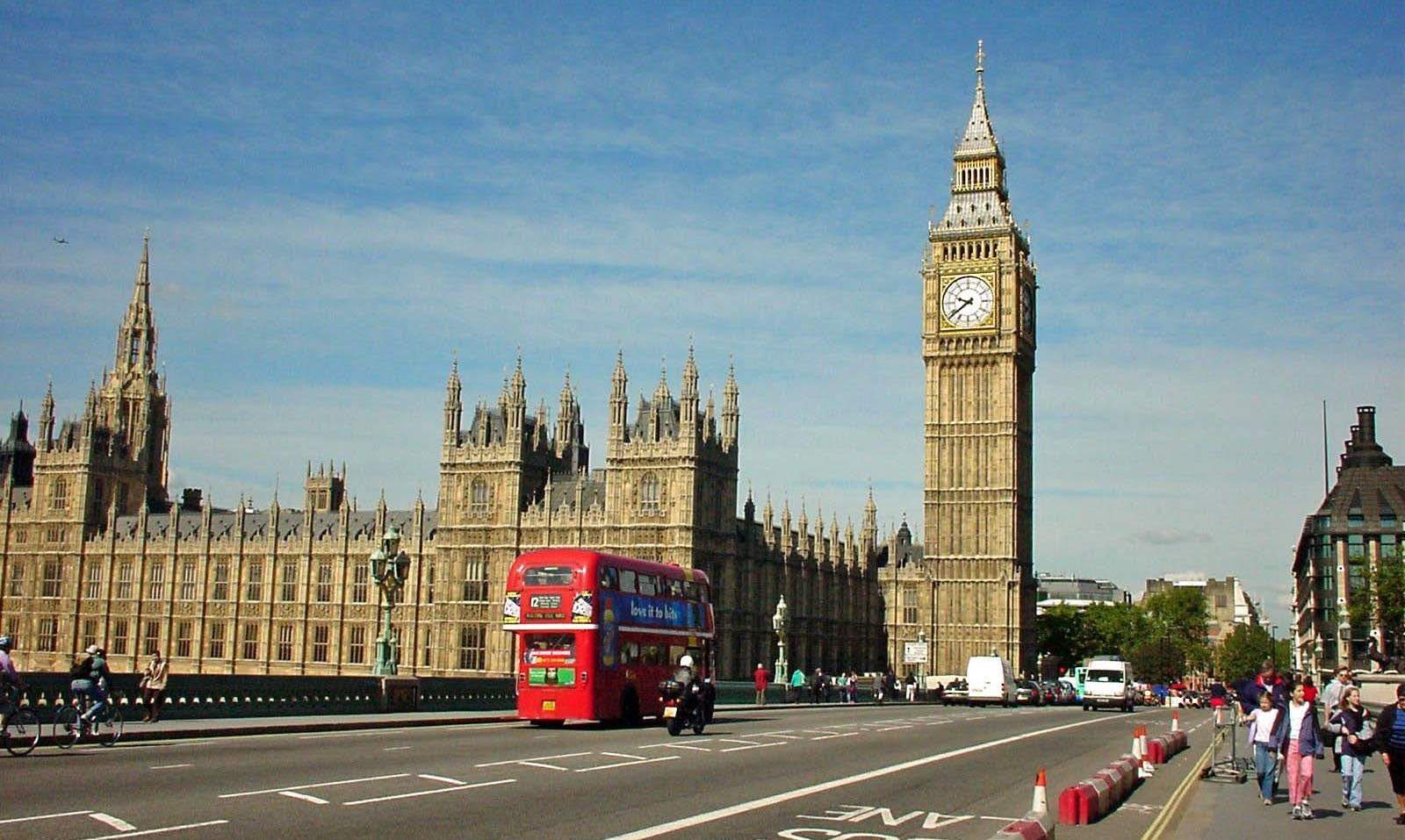 |
| This is what London looks like. |
There was an article about this in the LRB the other month. France is much better at giving its provincial towns identity. Here stories are either in London, or in a hazy non-London.
19th-century literature could represent life outside London only with vague gestures of generalisation, as if the naming or describing of actual towns in the provinces fell under a pudeur scarcely less than that obscuring sex... Middlemarch is the title of a great novel, but the town itself is an abstraction, whose relation to the Coventry at which scholars try to peer behind it is notional. Was ‘Coketown’ – one of Dickens’s few excursion outside London – based on Preston, as some believe? It hardly matters.North and South? Skirts drawn up around Manchester, set in ‘Milton’. In Hardy, the faux-archaism of ‘Wessex’ and its cod-toponyms – Casterbridge, Melchester, Christminster and the rest…When you start thinking of more examples you can't stop. Lot of things have been filmed in Bradford (e.g. Billy Liar), very few are set there. A Kind of Loving is set in "a Lancashire town". Not Preston, not Blackburn, not Burnley. Just "The North". The Nottingham-ness of Saturday Night and Sunday Morning is a big part of the book, considerably played down for the film. Even J.B. Priestley, Bradford's foremost literary son, talks of the amalgamous Bruddersford.
Even in modern times… Amis’s Lucky Jim tippexed Swansea, and Lodge’s ‘Rummidge’ trilogy could not bring itself to name Birmingham. The persistence of the convention speaks volumes for the low standing of urban life outside the capital, novels risking loss of audience if they speak too openly of a particular city, as unlikely to be of much interest to anyone outside it.
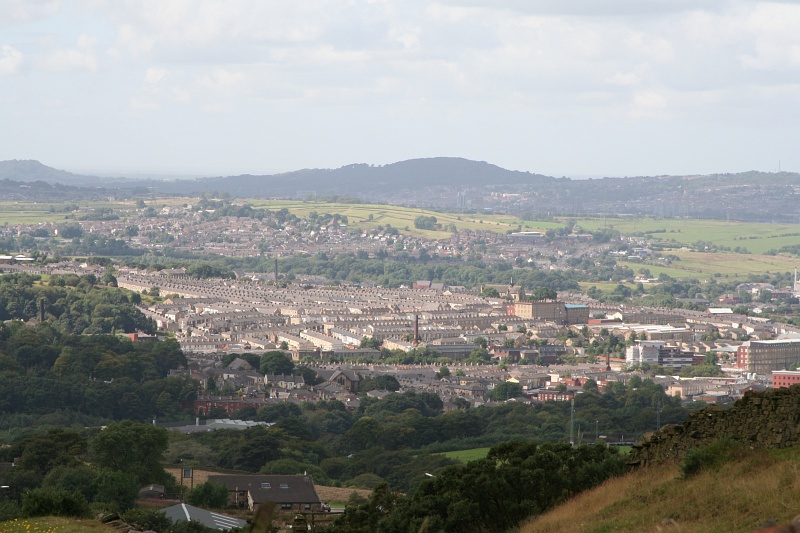 |
| "The North" (actually Accrington) |
Why I think this is important!
Specificity confers legitimacy. Despite its complexity London is simply easier to visualise than anywhere else in the UK. Because of this (I theorise), and leaving economic considerations to one side, people are more likely to move there after university because they can picture themselves there. It becomes the only feasible destination for internal migration.
It's also subtly easier to support investment projects like Crossrail or a new airport as we can imagine what it might look like and how it'd fit in to our existing mental model. Consider a Crossrail which went from Liverpool to Hull. The national mental image would be something like:
Liverpool: Beatles -> Warrington… rugby league? -> Manchester… football/Oasis -> West Yorkshire… don't know -> Bradford: curry -> Leeds… don't they have a Harvey Nichols? -> Hull… Who knows anything about Hull?Without a strong mental picture it's a hard idea to get behind. Once these cities had football teams to represent them. With the globalisation of the Premiership these teams have become international brands who happen to have head offices these towns and cities.
A nice counter example is Happy Valley. We watched the first episode last night. It was pretty good! The best thing about it was its accuracy. This wasn't "Yorkshire" it was the Upper Calder Valley. Things happened in Sowerby Bridge. Todmorden got a shout out. Until recently we lived in that valley, before moving 15 miles east to Bradford. We've never regretted that move, but last night the images on the TV, just because they were images on a TV, started to tug at me. Suddenly the place felt more real, just from being reflected in culture.
 |
| Hebden Bridge |
Monday, 28 April 2014
Oh! If only I'd paid more attention to Sam Wollaston!
This article on pop culture resolutions came out months ago and I still think about it most weeks. Some of them are OK (a couple of guys talking about finishing their novels), one is superb (getting back into tabletop RPGs) but generally they're bonkers. Reading Salman Rushdie! Watching Deadwood! Seeing more new films! Seeing more old films!
Christ, as if there aren't enough things to worry about we're turning fun into to-dos. You see it all over - "Your Next Boxset". My next one? "Have you seen ___ yet?" Yet!
Not saying these things aren't good, most of them are, but there's an insidious sense of cultural obligation here, fostered by the Media-DVD Boxset complex (who need to make profits); you will not be a proper person unless you watch True Detective (or whatever).
It's worth remembering that if you never watched anything else on TV, or ever read another book, you'd be just fine. There is not a gap which can be incrementally filled with culture units.
I'M NOT SAYING THAT TV IS RUBBISH. Just saying you can swap in having a chat, popping out or playing gin rummy. These are all perfectly acceptable substitutes for culture, they just have smaller marketing budgets than HBO.
It's a cliche that no one is ever on their deathbed wishing they'd spent more time in the office. I'm sure it's the same for consuming "stuff".
I wish I'd spent more time watching television.
I wish I'd spent more time checking twitter.
This video is good. Don't be put off by it being from Sam Harris, it's not too scolding. It doesn't suggest people shouldn't have any fun.
It is always now. You won't live forever. Don't spend any more time reading this half-arsed blog - start your own half-arsed blog!
Subscribe to:
Posts (Atom)