Showing posts with label the north. Show all posts

Sunday, 10 August 2014

Coming to terms with Leeds

Leeds isn’t cool. 

Other similar cities have had their “moment”: Liverpool in the early ‘60s and ‘80s, Manchester in the late ‘80s/early ‘90s. Leeds hasn't had a moment. 

West Yorkshire should be more closely associated with the British filmmaking New Wave -- Tony Richardson is from Shipley, Keith Waterhouse is from Leeds -- but although some of the best examples were filmed here they tended to be set in general “Northern Land” rather than Leeds (/Bradford/Halifax).

Other cities have their bands. The obvious Manchester and Liverpool ones… Sheffield has Pulp, Human League, even the Arctic Monkeys. 

Leeds has The Kaiser Chiefs, who are too well known to be cool, and The Wedding Present, who probably aren’t well known enough. There was a time in the late ‘90s when the “Superclub” was a thing, and Leeds had a few of those, but tastemakers quickly reclassified them as naff. Bad luck, Leeds.

Having it in Majestyk's, Leeds

Leeds is hard to root for. 

It’s not small enough to be an inspiring underdog. It’s not far enough away to be exotic, like Newcastle. 

And the football team! Everyone hates the football team. Dirty Leeds. Violent Leeds. Racist Leeds. 

A Leeds United Fan
What looks like general dislike of Leeds is actually distaste. It’s just so common.

A terrific counterweight to the anti-Leeds narrative is Promised Land: A Northern Love Story by Anthony Clavane. It’s the story of a city, its football team, and its once large, now dwindling, Jewish population. 
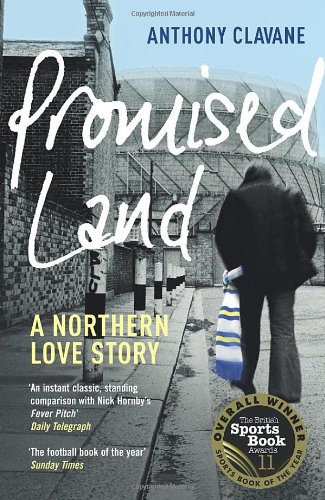


Clavane argues that Don Revie’s Leeds United belong with those other northern influences which made the ‘60s: Harold Wilson, Billy Liar, the Beatles, David Hockney, the Liverpool poets etc etc. 

Yes, Revie’s team. Any reference to which is described by Giles Smith as:
The nuclear option. There is, quite simply, nowhere to go after that. There has never been a more horrible team.
This is an embedded view, deepened by The Damned United: Clough’s beautiful spirit crushed by Revie and Leeds.

There is another version of this story. Leeds, under Revie, went from second division to first division runners up in 3 years, winning the title four years later. A team which replaced its kit so it could be more like Madrid. A team with ambition who did everything necessary to win.  And why shouldn't they? Why should they settle for being the team the rightful winners play against?

This Leeds was an insurgent, revolutionary force, loathed by the establishment. Why does public opinion side with the establishment on this one? Clavane tells us the FA (public school Corinthians) were:
Appalled by Revie. They considered his attempt to develop a ruthless, fiercely competitive, hard-headed winning machine to be, at best, ungentlemanly. At worst, they claimed, it heralded the game’s loss of innocence.
This Leeds reminds me of Chelsea. Chelsea were popular when they were losing gallantly under Ranieri. When Mourinho took over and they too became a winning machine, the greatest team of the modern era, people went off them. It doesn’t do to upset the natural order. Chelsea had money too, of course, but how else are you going to do it nowadays?

Don't they look young.
Anyway, Revie eventually left Leeds and they became mediocre (and still disliked). 

Actually, for a while they were both good and popular. In the late 90s and early ‘00s they had a dashing young team terrorising Europe. That team was part of the North’s last “moment”, when its cities made a play to turn themselves into city break destinations, the Superclubs were dominant and London seemed a little bit staid. Clavane is very good at tying this all together, with the team part of a rebranded outwards-looking Leeds.

Then the club imploded, to widespread delight. It's worth considering what exactly it was that people were so happy about.
The Fall of Leeds was presented as some kind of early noughties morality tale, a parable of greed, excess and hubris. How deluded to think they could build a team to match the citadels of Manchester and London, let alone Milan and Madrid.
Now the South and the establishment has reasserted itself entirely.

Let us not fall into the traps set by the forces of conservatism. Let us not disdain Leeds. Let us celebrate Leeds the Upstart! Leeds the Dreamer! Leeds the Beautiful!

A few such moments.

1) One month in ’72 Revie’s Leeds beat Nottingham Forest 6-1, Manchester United 5-1 and Southampton 7-0. The last of these is famous. You’ve seen the clips before, but they’re always worth a couple of minutes of your time. The goals are on the first video. Not great quality, but you can see what’s going on. (Music by T-Rex, the least Leeds band ever.) I’d suggest you go straight to the second video and soak up the showboating (from 6 minutes).  


 2) Some Cantona greatness from his season at Leeds (so not repeated beyond impact); 21 seconds in. 


3) And that time when for a few weeks in the mid-90s Tony Yeboah was the best player in the world.

Thursday, 8 May 2014

The importance of a non-London specificity

Right. This post is not bemoaning the lack of non-London set drama. This is about specificity.

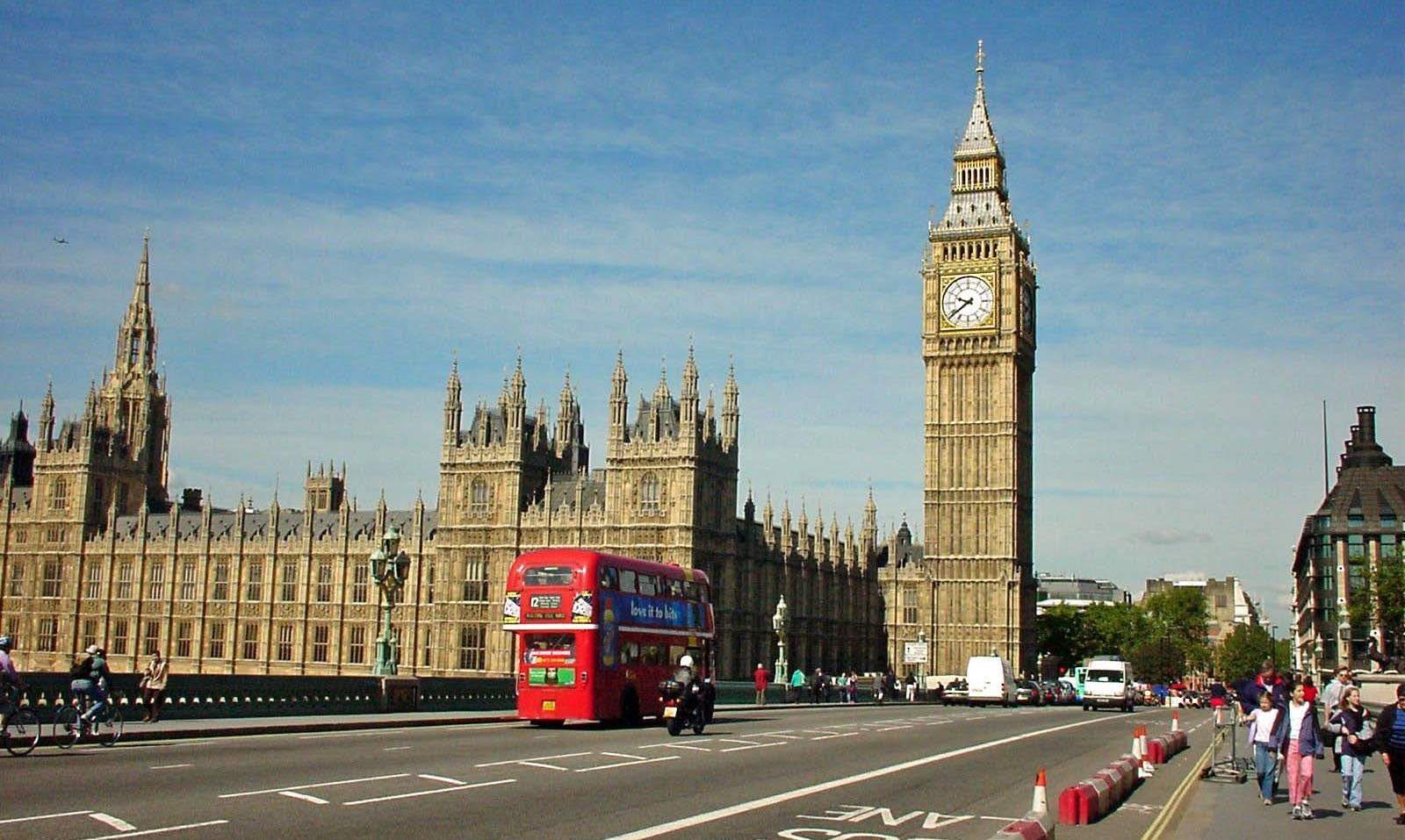
Everyone has a mental map of London, even if they've never been there (the Gherkin and banks are over there, theatres are somewhere else, the museums and parks and Buckingham Palace). Everyone in Britain has seen thousands of images of London, and, crucially, they have been labelled LONDON.

This is what London looks like.
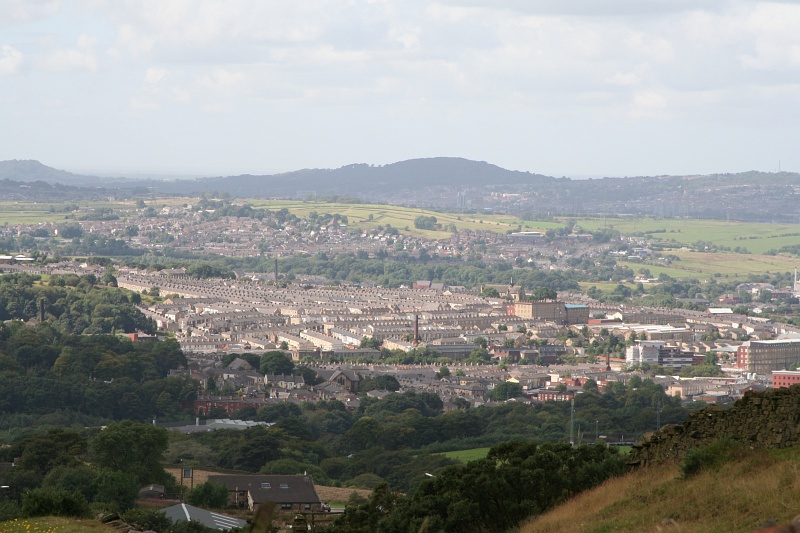
The problem with the rest of England is that its images are seen, but they are rarely tagged to place.

There was an article about this in the LRB the other month. France is much better at giving its provincial towns identity. Here stories are either in London, or in a hazy non-London.
19th-century literature could represent life outside London only with vague gestures of generalisation, as if the naming or describing of actual towns in the provinces fell under a pudeur scarcely less than that obscuring sex... Middlemarch is the title of a great novel, but the town itself is an abstraction, whose relation to the Coventry at which scholars try to peer behind it is notional. Was ‘Coketown’ – one of Dickens’s few excursion outside London – based on Preston, as some believe? It hardly matters.North and South? Skirts drawn up around Manchester, set in ‘Milton’. In Hardy, the faux-archaism of ‘Wessex’ and its cod-toponyms – Casterbridge, Melchester, Christminster and the rest
Even in modern times… Amis’s Lucky Jim tippexed Swansea, and Lodge’s ‘Rummidge’ trilogy could not bring itself to name Birmingham. The persistence of the convention speaks volumes for the low standing of urban life outside the capital, novels risking loss of audience if they speak too openly of a particular city, as unlikely to be of much interest to anyone outside it.
When you start thinking of more examples you can't stop. Lot of things have been filmed in Bradford (e.g. Billy Liar), very few are set there. A Kind of Loving is set in "a Lancashire town". Not Preston, not Blackburn, not Burnley. Just "The North". The Nottingham-ness of Saturday Night and Sunday Morning is a big part of the book, considerably played down for the film. Even J.B. Priestley, Bradford's foremost literary son, talks of the amalgamous Bruddersford.

"The North" (actually Accrington)

Why I think this is important! 

Specificity confers legitimacy. Despite its complexity London is simply easier to visualise than anywhere else in the UK. Because of this (I theorise), and leaving economic considerations to one side, people are more likely to move there after university because they can picture themselves there. It becomes the only feasible destination for internal migration.

It's also subtly easier to support investment projects like Crossrail or a new airport as we can imagine what it might look like and how it'd fit in to our existing mental model. Consider a Crossrail which went from Liverpool to Hull. The national mental image would be something like:
Liverpool: Beatles -> Warrington… rugby league? -> Manchester… football/Oasis -> West Yorkshire… don't know -> Bradford: curry -> Leeds… don't they have a Harvey Nichols? -> Hull… Who knows anything about Hull? 
Without a strong mental picture it's a hard idea to get behind. Once these cities had football teams to represent them. With the globalisation of the Premiership these teams have become international brands who happen to have head offices these towns and cities.

And you know, the images we're missing don't even have to be positive. The Olympics is one thing, but deprivation in Tower Hamlets, gangsters, riots - it all adds to a solid idea of "LONDON" and an unvoiced suspicion that London is the only place which is actually, you know, real.

A nice counter example is Happy Valley. We watched the first episode last night. It was pretty good! The best thing about it was its accuracy. This wasn't "Yorkshire" it was the Upper Calder Valley. Things happened in Sowerby Bridge. Todmorden got a shout out. Until recently we lived in that valley, before moving 15 miles east to Bradford. We've never regretted that move, but last night the images on the TV, just because they were images on a TV, started to tug at me. Suddenly the place felt more real, just from being reflected in culture.

Hebden Bridge
I started to miss the place, even though it was portrayed as a picturesque hotbed of junkies and drunks. As I say, the best thing about it was its accuracy.

Wednesday, 30 April 2014

There is such a thing as Britishness!

With Scottish independence and all that there's been focus on the idea of Britain, and what it means and all the rest of it.

There is a British identity, one which makes sense, with shared history and cultural values. The problem is that this Britain is ruled by, but doesn't culturally include, the English South East.

England just isn't a real country. The differences between northern England and Scotland or Wales are much smaller than the differences between northern England and the south east. The Russian dolls of identity make more sense as northern > British than English > British.

There's a natural brotherhood of the Scots, Welsh, Cornish, (Northern) Irish and Northern English. These guys all have loads in common. Landscape, sheep, post-industrial decline, an interest in folk and country music, tea, fish suppers, reserve, good humour, a shared hatred of London.

An independent Scotland would be sad for the rest of this Britain, but at least some of us will have got out. It's just a shame that it's the wrong bit going its way. That bit at the bottom, the England of Top Gear and Bake-Off and finance and media and royalty and morris dancing and London. We don't need that bit. Also, they hate us.

A nice Britain of 40million, with the capital in, say, York, would be lovely. We could just crack on being a medium-sized European country and relax. England-minor could go its way making money and being "global". Everyone would win.

We've really buggered up how we've organised this place.


ADDENDUM: I don't really know where the South-West fits in, or the Midlands. I'd like to take Birmingham with us but I guess it's up to them.